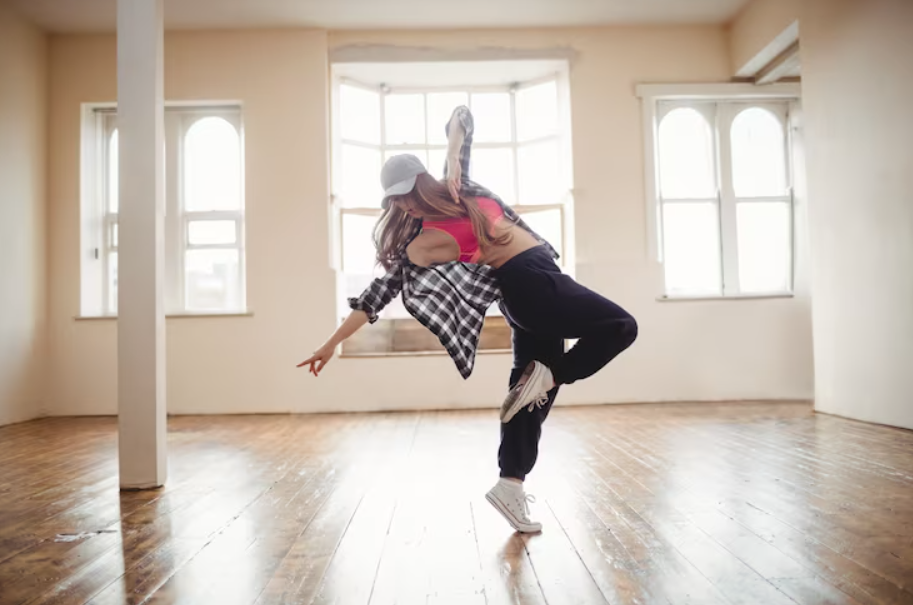
A dancer changes direction in an instant, lands a jump without losing balance or stops a turn precisely on the beat. From the audience, it can look effortless. What goes unnoticed is the work behind those few seconds: repeated drills, physical conditioning and countless small corrections.
Dancing demands strength, coordination and control, but athletic ability alone is not enough. Performers must interpret music, manage space and, in partnered or group routines, stay connected to other dancers. Even a technically clean move can lose its impact when the timing is off. Strong musicality, meanwhile, cannot always make up for unstable footwork or poor execution.
Competition brings another challenge. Dancers perform under pressure, sometimes with unfamiliar music or opponents whose strengths differ from their own. Ballroom events emphasize established technique and partnering, while freestyle battles leave more room for improvisation and individual expression.
A successful performance brings those qualities together. The audience sees the finished routine; the judges look more closely at how the dancer gets there.
When Dancing Becomes a Competitive Sport
Not every dance performance is a sporting contest. Social dancing, recreational classes and theatrical productions serve different purposes, even when they involve techniques also used in competition.
Competitive dancing operates within organized events with defined categories, eligibility requirements and judging procedures. Performers train with specific goals in mind, whether that means refining a prepared routine, mastering technical elements or developing the skills needed for freestyle battles.
Ballroom DanceSport offers a familiar example. Couples compete in dances including waltz, tango, cha-cha-cha and jive. Judges compare technical quality, musical timing, partnering and other performance characteristics. In breaking, competitors typically face one another in battles, using individual rounds to demonstrate their skills and personal style.
Preparation reflects these differences. Ballroom couples spend months refining technique and rehearsed combinations while learning to adjust their movement to the available space. Breakers develop a broad range of moves, then practice connecting them in different ways depending on the music and competitive situation.
Unlike racing or athletics, a dance competition has no universal equivalent of a stopwatch or finish line. Results depend on judges applying criteria established for each discipline. That makes clear rules and consistent evaluation particularly important.
The sporting demands are nevertheless substantial. Competitive dancers need physical conditioning, technical consistency and the ability to perform when fatigue or pressure threatens their execution.
The Role of Music and Rhythm in Dance Performance
A dancer can know every step of a routine and still struggle when the music starts. The problem is often not memory but timing. A movement initiated a fraction too early may disrupt the next sequence, while a poorly placed accent can weaken an otherwise convincing performance.
Music shapes movement through tempo, rhythm and phrasing. It also influences how dancers distribute energy. A fast passage may call for sharper footwork; a quieter section can give a controlled pause greater impact than another difficult combination.
Good dancers anticipate these changes. Rather than treating the track as background accompaniment, they use its structure to guide their choices.
Musical Timing and Movement
Timing begins with recognizing the underlying pulse. Experienced dancers also listen for subdivisions, accents and changes in musical phrasing.
A sharp movement might emphasize a percussion hit. A turn can extend across several counts, while a brief stop may coincide with a break in the track. These choices give movement its rhythmic character.
Ballroom disciplines follow established timing conventions. Waltz is commonly danced in triple meter, whereas cha-cha-cha uses characteristic syncopations within a four-beat musical framework.
Street-dance styles often allow greater freedom in interpreting musical details, although each has its own rhythmic conventions. Hip-hop dancers may follow the drums, respond to a bass line or isolate movements around vocal accents. Breakers frequently build combinations around percussion breaks and changes in the track.
Good timing involves more than keeping count:
- Beat recognition: Maintaining the underlying pulse as the music develops.
- Rhythmic precision: Placing movements accurately within beats and subdivisions.
- Phrasing: Connecting sequences to larger musical sections.
- Dynamic control: Changing speed, force and movement quality to match the music.
- Musical interpretation: Selecting movements that reflect a track’s structure and character.
Counting helps when learning complicated choreography. During performance, however, dancers need to internalize the rhythm rather than treat every movement as a numbered instruction. Otherwise, even accurate steps can appear mechanical.
How Different Music Genres Shape Dance Styles
Dance traditions develop alongside the music and communities that sustain them. Their movement patterns often reflect particular rhythms, instruments and social settings.
Hip hop dancing draws on groove, rhythmic variation and a close relationship between movement and beats. Bounces, rocks, isolations and directional changes appear in different combinations depending on the style.
Breaking emerged within hip-hop culture in New York during the 1970s. DJs’ use of percussion breaks helped shape its early development. The dance combines upright steps, intricate floorwork, freezes and rotational power moves.
House dance grew from club culture and developed a different movement quality. Its quick footwork, fluid transitions and continuous groove reflect the rhythms of house music.
Ballroom styles also have distinct musical characteristics. Slow waltz features flowing movement and rise and fall, while tango relies on grounded action and sharper directional changes. Latin dances use their own patterns of timing, weight transfer and body movement.
A dancer with excellent coordination may still struggle when moving into an unfamiliar style. Learning new steps is only part of the process; understanding the groove and characteristic movement quality takes practice.
Popular Styles of Competitive Dancing
A ballroom couple crossing the floor, a breaker holding a freeze and a hip-hop crew performing synchronized choreography have little in common visually. Yet all three can compete within organized dance events.
The differences extend beyond appearance. Each discipline has its own technical demands, performance conventions and competitive format.
Breaking and Hip-Hop Dance
Breaking is among the best-known competitive street-dance forms. Its movement vocabulary is commonly described through four broad elements.
Toprock consists of upright steps that establish rhythm and introduce combinations. Downrock involves floor-level movement, particularly footwork patterns, changes of position and coordinated support through the hands. Freezes involve stopping in controlled positions, sometimes balancing on the hands, arms or head. Power moves use dynamic rotational actions, including windmills and flares.
A strong breaking round connects these elements through clean transitions, musical interpretation and original combinations. Difficult tricks can be impressive, but they lose much of their effect when poorly executed or disconnected from the music.
Competitive breaking dance reached a major international milestone at Paris 2024. The breaking’s Olympic debut featured individual competitions for B-Boys and B-Girls, introducing the discipline to a wider sporting audience.
Breaking was not included in the Los Angeles 2028 Olympic sports programme. Its absence does not diminish the independent competitive scene, where international championships, cultural festivals and local battles continue to play a central role.
Hip-hop choreography competitions follow a different format. Crews perform prepared routines, with attention given to synchronization, formations, timing and group execution. Although breaking and hip-hop choreography share cultural connections, their competitive requirements are not interchangeable.
Ballroom and Latin DanceSport
Ballroom DanceSport is commonly divided into Standard and Latin disciplines.
Standard competitions generally include slow waltz, tango, Viennese waltz, slow foxtrot and quickstep. Latin events feature samba, cha-cha-cha, rumba, paso doble and jive.
Each dance has a recognizable technical character. Standard places particular emphasis on posture, coordinated partnering, precise footwork and controlled movement across the floor. Latin requires different rhythmic actions, weight transfers, body mechanics and expressive qualities.
In Standard, couples generally maintain a connected dance hold, though its precise form and movement requirements vary between dances. Latin allows a wider range of partner connections, including separated positions.
Floorcraft is another important skill. Several couples may compete simultaneously, particularly in Standard events where dancers travel around the floor. Partners must adjust their direction and spacing without losing timing or disrupting other competitors.
Judging methods depend on the organization and competition level. Some events use comparative rankings, while others apply systems that assess individual performance qualities in greater detail.
A successful partnership requires more than two technically capable dancers. Both must understand how their timing, weight transfers and movements affect one another. Even a small mismatch can disturb the balance or direction of the couple.
Street Dancing
Street dancing covers traditions associated with street, social and club cultures. Locking, popping, house and hip-hop freestyle have different technical foundations despite often appearing at the same events.
Locking uses recognizable stops, gestures and rhythmic contrasts. Popping relies on rapid muscular contractions that produce visible hits. House emphasizes groove, footwork and fluid transitions, while hip-hop freestyle incorporates social-dance movements and individual interpretation.
Competitive events may feature solo battles, crew battles or choreographed showcases. A freestyle dancer must adapt to the music in real time. A crew preparing a routine faces a different challenge: making individual movements work as part of a coordinated performance.
These styles retain strong connections to their social origins. Understanding the music, movement traditions and cultural context helps dancers develop performances that go beyond simply reproducing steps.
Physical Skills Every Dancer Needs
A breaker supporting their body through one arm and a ballroom dancer maintaining posture through a demanding sequence use strength in very different ways. Both need control, but the muscles involved and the way force is applied are not identical.
That distinction matters in training. A breaker’s conditioning programme should look quite different from a ballroom dancer’s. Floorwork places substantial loads on the wrists, shoulders and trunk, while traveling ballroom sequences demand lower-body endurance, postural control and precise coordination between partners.
No single physical quality determines success. Strength, mobility, balance and stamina must work together, with their relative importance changing from one style to another.
Strength, Flexibility and Coordination
Strength allows dancers to generate force and control it. It supports jumps, changes of direction, stable positions and movements that require the body to bear weight through the arms.
Squats, split squats and calf raises can develop lower-body strength for takeoffs, landings and footwork. Rows, push-ups and progressively more demanding upper-body exercises are useful for dancers who perform floorwork and supported positions.
Trunk strength helps maintain posture without making the torso unnecessarily rigid. Depending on the movement, dancers need to stabilize, rotate or shift their upper body while keeping the rest of the sequence under control.
Flexibility matters, but passive range of motion does not automatically translate into usable movement. Someone who can hold a deep stretch on the floor may struggle to achieve the same position while standing or moving.
Mobility training should therefore develop strength and control throughout the required range of motion.
Coordination connects these abilities. An isolation might involve moving the chest while keeping the pelvis relatively still. Turns require precise interaction between the feet, hips, trunk and head. Partner dancing adds the challenge of coordinating with another person’s movement.
General conditioning builds a useful foundation, but technical dance practice remains essential for turning physical capacity into performance.
Balance, Stamina and Body Control
Balance is rarely a matter of standing completely still. Even a sustained pose requires small adjustments through the feet, ankles, hips and trunk.
During turns, dancers manage their center of mass while controlling momentum. Traveling sequences introduce further challenges, particularly when movements end with sudden stops or changes of direction.
Proprioception, the ability to sense body position and movement, contributes to these adjustments. Single-leg exercises, controlled turns and progressively challenging movement combinations can help develop dance-specific balance.
Stamina is equally important, though its demands differ between disciplines. Breaking rounds often involve short bursts of explosive movement with little opportunity to recover between combinations. Ballroom competitors may perform several dances in succession while maintaining posture, timing and coordination.
Aerobic fitness supports sustained activity and recovery between efforts. Anaerobic capacity helps during repeated bursts of demanding movement.
Fatigue can compromise technique. When alignment deteriorates or landings become unstable, continuing at full intensity may reinforce poor movement habits. Experienced dancers learn to conserve energy where possible and apply greater force only when the movement requires it.
How Competitive Dancers Train
Competitive training combines technical practice, physical conditioning and preparation for performing under pressure.
Workloads depend on experience, discipline and the competition calendar. Beginners generally spend more time establishing basic movement patterns, while experienced competitors refine advanced skills and performance consistency.
Ballroom sessions may begin with weight transfers, foot placement and partner connection before progressing to complete routines. Breakers often practice individual footwork patterns, freezes and transitions, then combine them into rounds.
Choreographed performances require attention to spacing, formations and musical accents. Freestyle preparation develops a range of movement options that dancers can adapt during battles.
A training programme may include:
- Technical drills focused on specific weaknesses.
- Complete routines or rounds performed at competition intensity.
- Strength and conditioning appropriate to the dance style.
- Mobility exercises and controlled movement preparation.
- Musical exercises using different tempos and rhythmic patterns.
- Video analysis of timing, posture and execution.
Mock competitions provide another useful challenge. Performing before an audience or working with unfamiliar music can reveal weaknesses that remain unnoticed during ordinary rehearsals.
Progress does not always require harder movements. Cleaner execution, more reliable timing and better transitions can substantially improve an existing performance.
Dance Battles, Competitions and Judging Criteria
Put two breakers on opposite sides of a floor, play an unfamiliar track and give each a limited time to respond. The result depends partly on preparation, but neither dancer can predict exactly what the other will do.
Now consider a ballroom final. Several couples share the floor, performing established dances while judges compare their technical and musical qualities. Competitors must maintain their performance despite changes in spacing and the movement of other couples.
Both are dance competitions, yet they reward different approaches. The format determines how performances are constructed, compared and ultimately judged.
Choreography vs Freestyle in Competitive Dance
Choreography gives dancers the opportunity to plan their movements around a chosen musical structure. They can refine transitions, coordinate visual effects and rehearse difficult sequences until the timing becomes reliable.
Group routines introduce additional complexity. Formation changes, synchronized movements and contrasting sections must work together. Even a small mistake can become obvious when several dancers are expected to move at precisely the same moment.
Freestyle demands a different approach. Competitors draw on practiced material but decide how to combine it as the music unfolds. In battles, those choices may also respond to an opponent’s performance.
Participants commonly alternate rounds, demonstrating technique, musicality and personal style. Some dance battles are decided through judges’ votes; others use structured comparison systems.
Preparation still matters enormously. Experienced freestyle dancers spend years developing their skills, testing combinations and learning how to make decisions under pressure. Improvisation is not the absence of practice; it is the ability to use that practice without relying on a fixed routine.
How Dance Competitions Are Judged
There is no universal scoring system for competitive dancing. Criteria depend on the discipline, organizing body and competition format, although several qualities appear frequently.
Technique concerns the accuracy and effectiveness of movement. Judges may assess alignment, footwork, control and adherence to the style’s technical requirements.
Musicality covers timing, phrasing and the relationship between movement and music. Staying on the beat is important, but a convincing interpretation also uses accents and changes in musical structure.
Performance involves presentation, confidence and the ability to communicate the character of a dance.
Originality is particularly significant in freestyle and breaking, where distinctive movement choices help competitors stand out.
Difficulty can influence evaluation, but complicated material does not guarantee a higher result. Execution remains important.
These are broad performance qualities rather than a standardized list of scoring categories.
In ballroom DanceSport, preliminary rounds may involve judges selecting couples to advance, while finals commonly use ranking procedures. Technical quality, movement to music and partnering are among the factors considered.
Breaking often relies on direct comparisons between competitors. Depending on the judging system, assessments can cover technique, execution, musicality, originality and movement variety.
Crew competitions may place additional emphasis on synchronization, formation changes and the overall composition of a routine.
A dancer preparing for a judged choreography competition trains differently from someone entering a freestyle battle. Knowing which qualities matter in a particular event helps competitors decide where to concentrate their preparation.
Preventing Injuries and Improving Recovery
Dance places repeated stress on muscles, tendons and joints. The risks depend on movement patterns, training intensity, surfaces and individual physical preparation.
Ankle sprains can occur during unstable landings or sudden changes of direction. Repeated jumping may contribute to lower-limb overuse injuries, while intensive floorwork places considerable demands on the wrists and shoulders. Back discomfort can also develop when demanding movements are repeated without adequate control or recovery.
Most preventable training problems involve some combination of excessive workload, poor movement mechanics or unsuitable conditions.
A warm-up should gradually increase activity and prepare the body for the work ahead. Light aerobic exercise, targeted mobility and progressively demanding technical drills are generally more useful before intense practice than immediately attempting maximum-range positions.
Training progression is just as important. A breaker learning a power move needs sufficient strength and technical preparation before attempting repeated full-speed executions. Dancers working on jumps should establish reliable landing mechanics before increasing difficulty or volume.
Practical measures include:
- Increasing workloads gradually, especially after a break.
- Practicing demanding skills while concentration and movement quality remain high.
- Choosing footwear and training surfaces suited to the discipline.
- Developing strength in muscles that support frequently loaded joints.
- Allowing sufficient recovery between intensive sessions.
- Seeking assessment for persistent pain rather than repeatedly training through it.
Recovery involves sleep, adequate nutrition and enough time between demanding sessions for the body to adapt.
Lighter technical practice may be appropriate between harder workouts, provided it does not aggravate fatigue or symptoms. Some situations call for additional rest, particularly when fatigue is substantial or an injury is suspected.
Pain that persists, worsens or changes normal movement should be assessed by a qualified healthcare professional. Continuing to train through an injury can prolong recovery.
Mental fatigue deserves attention as well. Rehearsing the same material under competitive pressure can affect concentration and motivation even when physical energy seems adequate.
A sustainable training schedule allows dancers to improve without treating every session as a test of maximum endurance.
FAQ
Is dancing considered a sport?
Dancing qualifies as a sport when practiced within an organized competitive framework with established rules and judging procedures. Ballroom DanceSport and competitive breaking are examples. Social and recreational dancing share many physical demands but are not necessarily sporting competitions.
What is the difference between dance sport and competitive dance?
Dance sport commonly refers to organized competitive dancing, particularly Standard and Latin ballroom disciplines. Competitive dance is a broader term that also covers breaking, street-dance battles, choreographed crew events and other judged performances. Terminology can vary between organizations.
Is breaking the same as hip hop dancing?
No. Breaking is a distinct dance form that developed within hip-hop culture. It includes toprock, downrock, freezes and power moves. Hip-hop dancing is a broader expression that may refer to different freestyle traditions and choreographic approaches associated with hip-hop music and culture.
What physical skills are most important for dancers?
Coordination, balance, strength, mobility and stamina all contribute to performance. Their importance varies by discipline. Breaking places substantial demands on upper-body strength and explosive control, while ballroom dancing requires precise partnering, posture, footwork and sustained movement quality.
How are winners chosen in dance battles?
Judges compare competitors according to the event’s rules. Assessments may consider technique, musicality, originality, execution and movement variety. Some battles use direct voting, while others apply structured evaluation systems. No single scoring method governs every dance battle.