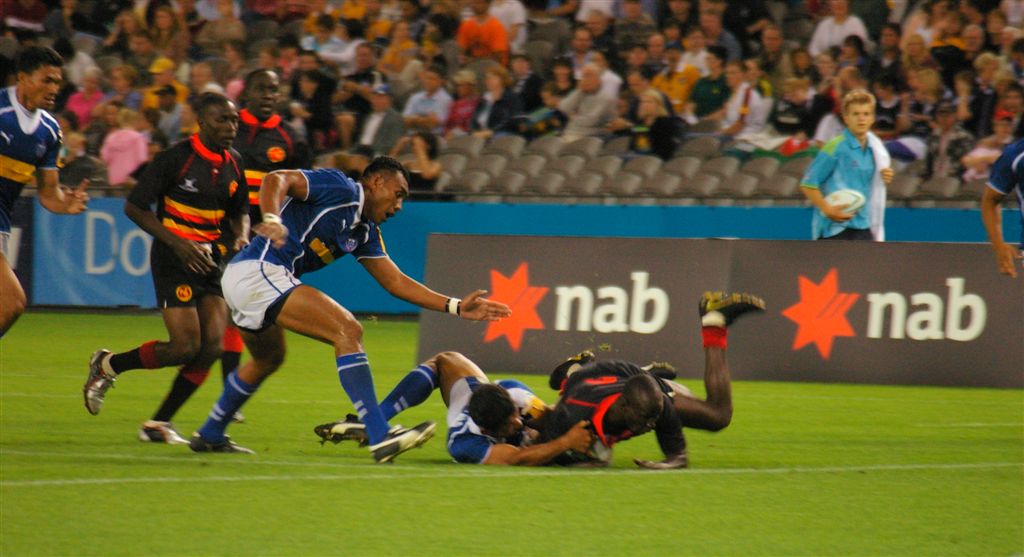
Rugby has a distinct place in Uganda’s sporting landscape. The game is physical and fast, but its appeal is also social: club grounds, school programmes and weekend fixtures often create an environment where players and spectators feel close to the action. Both fifteens and sevens offer different experiences, giving the sport a broad enough structure to keep growing at several levels.
A different kind of matchday energy
A list of online betting companies in uganda comparison may appear beside a rugby fixture, yet the more interesting part of the sport is how much information sits behind a scoreline. Rugby asks a team to manage territory, possession, set pieces and discipline at the same time. A side can look energetic for long periods and still lose because it gave away field position or failed to convert pressure into points.
Rugby creates a different matchday rhythm from football, but its appeal also begins with people gathering around a shared contest. Training sessions, club conversations and post-match reflection can make the sport feel accessible even to someone learning its laws. The people involved are club players, coaches, referees, student teams, families, volunteers and the people who prepare grounds on matchdays. In that setting, details such as territory, set-piece accuracy, the breakdown, defensive line speed, discipline and how a side responds after losing possession are not background noise; they shape the experience and reveal what needs attention. Looking at this layer adds useful context. It explains why two events with the same final score or placing can feel completely different, and why a well-run but quiet occasion can matter just as much as a dramatic one. Sport becomes more informative when those details are noticed. This early work is easy to miss, yet it often determines whether the event feels calm, accessible and worth repeating for a first-time visitor as well as for a committed participant.
Why the club system matters
Club rugby gives players a place to learn the habits that national teams later need: tackling safely, communicating under pressure and understanding the collective responsibilities of each position. The sport also depends on coaches, referees, medical staff and volunteers whose work is rarely as visible as a try or a conversion. Strong local structures make it easier for talented players to stay in the game long enough to improve.
School rugby is particularly important because it introduces the sport in an organised environment. Young players learn how to train, compete and respect the laws of the game before the expectations become higher. That pathway can also create opportunities for girls and boys who may not have had access to the same sporting facilities elsewhere.
The club system matters because rugby is learned through repetition and trust. Players need teammates who understand their role at the set piece, coaches who can teach contact safely and officials whose decisions are respected even under pressure. Behind that visible activity sits a system: safe coaching, referee development, youth programmes, appropriate medical support, dependable fixtures and inclusive club spaces. These elements may seem administrative, but they decide whether preparation is calm or rushed and whether a sporting space feels open to the people it is meant to serve. It is worth treating these practical arrangements as part of sporting standards. They make participation safer, lower the chance of avoidable disruption and allow the best qualities of the competition to become visible. The practical test is whether people can understand what is expected of them, prepare in good time and focus on the sporting task rather than on avoidable uncertainty.
Reading the game beyond the highlights
To understand a rugby match, watch the battle for territory as closely as the tries. Kicking decisions, lineout accuracy, scrum stability and discipline near the breakdown often determine which team controls the final quarter. Sevens moves at a much quicker speed, where fitness and one missed tackle can change the whole contest in seconds.
Rugby deserves to be followed with the same care as football or athletics. The uncertainty of a live contest is exactly why it should not be treated as a source of guaranteed returns. The lasting value lies in its community, its pathways for young athletes and the way Uganda’s Rugby Cranes and Lady Cranes carry local club experience into regional competition.
A viewer can follow rugby more closely by watching what happens before the highlight. Field position, a clean line-out, a disciplined defensive line or a penalty conceded at the wrong moment may explain the score better than a final burst toward the try line. A closer observer can use territory, set-piece accuracy, the breakdown, defensive line speed, discipline and how a side responds after losing possession as a guide, then compare what was planned with what unfolded. The same final result can have several causes, so it helps to watch where pressure appeared, who adapted and which small decision changed the balance. The aim is not to turn every viewer into a specialist. It is simply to replace vague reaction with a more curious, grounded understanding of what actually happened. Keeping a short record of these details from one event to the next is often enough to reveal a pattern that a single score, clip or headline would hide.
Community is rugby’s lasting advantage
Rugby can keep growing when clubs make the sport welcoming to new players and families. Open training sessions, clear youth pathways and visible role models help remove the idea that the game belongs only to experienced athletes. The more people understand its laws and culture, the easier it becomes to appreciate the skill behind a contested scrum or a well-worked try.
That community spirit should also guide how fixtures are discussed. Competition can be intense without becoming personal, and a loss can still offer lessons for the next game. Rugby’s best traditions reward respect for opponents and officials, which is a valuable standard for every sport in Uganda.
Rugby also offers an entry point for people who may not see themselves as elite athletes at first. Schools, universities and community teams can provide coaching, friendship and a structured environment in which confidence gradually grows. This is where new players who often meet the game through schools, universities or community clubs before moving into more competitive squads becomes important. Development works best when expectations are clear and the next opportunity is earned through learning, not through pressure to look finished too early. This long view benefits the whole community. It creates better players and athletes, but it also develops future coaches, officials, organisers and informed supporters who understand the work required behind performance. That is particularly important for young participants, who need feedback that explains what to practise next instead of a verdict that labels them too early.
The game keeps teaching
Every rugby match offers a lesson about collective responsibility. One player can make a decisive break, but the moment is usually created by support, communication and discipline from the whole team. That makes rugby a valuable sporting language for young people as well as an exciting event to watch.
The sport’s culture is strongest when competitiveness does not excuse poor behaviour. Respect for opponents, referees and player welfare must remain visible, particularly when a match is physical or a result matters deeply to both clubs. The lasting standard is straightforward: rugby grows most sustainably when its social energy is matched by attention to safety, respect and good coaching. That principle helps supporters, organisers and athletes decide which parts of the experience deserve investment and which habits should be changed. The point is not to make sport less emotional. It is to give that emotion a constructive place, so the energy around an event supports people rather than exhausting them. It gives everyone involved a useful decision rule: choose the action that protects participation, learning and respect after the noise of a single result has faded.
A longer view of the subject
For that reason, the subject deserves more than occasional attention. It offers a way to see how individual effort, local organisation and public support meet in the same sporting space. When those elements are allowed to reinforce one another, the result is not just a better event but a stronger route for the people who will play, coach, organise and follow it next. For rugby as a community sport in Kampala and beyond, that is the practical meaning of sustained support.
One final point is that rugby as a community sport in Kampala and beyond depends on continuity. When club players, coaches, referees, student teams, families, volunteers and the people who prepare grounds on matchdays can rely on safe coaching, referee development, youth programmes, appropriate medical support, dependable fixtures and inclusive club spaces, the next season or event begins from a stronger place. That continuity makes it easier to protect new players who often meet the game through schools, universities or community clubs before moving into more competitive squads and to keep the standard clear: rugby grows most sustainably when its social energy is matched by attention to safety, respect and good coaching